Category Archives: Museums

CosmoCaixa Barcelona: Science Museum for Curious Minds of All Ages

Tucked away in the Sarrià-Sant Gervasi district at the foot of the Tibidabo hills, CosmoCaixa is regularly rated one of the best science museums in Europe — and significantly undervisited by international tourists who tend to focus on the city’s art and architecture. That’s their loss.

The Flooded Amazonian Forest

The museum’s centrepiece is something genuinely extraordinary: a living, flooded Amazonian rainforest contained within the building. Around 100 species of plants, fish, reptiles, birds, and mammals live here in a carefully maintained ecosystem. The temperature, humidity, and light levels are kept at Amazonian conditions year-round. Walking through the boardwalk path, you’ll hear howler monkeys, see caimans basking, and feel the heat and density of the equatorial forest — without leaving Barcelona.

Geological Wall and Interactive Exhibits

The Geological Wall presents a cross-section of Earth’s geological history in physical rock samples — a floor-to-ceiling display that covers billions of years of planetary evolution. Elsewhere, interactive exhibits explore physics, chemistry, biology, and cosmology in ways that are engaging for adults and children alike. The Planetarium shows are an additional attraction worth booking in advance.

How to Get There

CosmoCaixa is at Carrer d’Isaac Newton, 26, in the Sarrià area. The easiest route is the FGC train to Av. Tibidabo station, then a short walk or the free museum shuttle. It’s open Tuesday through Sunday from 10am; closed Mondays. The garden outside is pleasant for a rest before or after your visit.

CaixaForum Barcelona: World-Class Exhibitions in a Modernista Factory

At the foot of Montjuïc, a former textile factory has been transformed into one of Barcelona’s most visited cultural spaces. CaixaForum Barcelona occupies the Fàbrica Casaramona, a 1911 building by Josep Puig i Cadafalch that stands as one of the finest examples of industrial modernisme in existence. The conversion — completed by Japanese architect Arata Isozaki in 2002 — added a distinctive floating steel entrance pavilion that became its own talking point.

The Building

The original factory is a brick masterpiece: crenellated roofline, slender iron columns, large windows, and an elaborate water tower. Walking through the restored interiors, it’s easy to imagine the machines and workers that once filled these spaces. Puig i Cadafalch brought the same care to industrial architecture that his contemporaries applied to private mansions — a testament to the breadth of the modernista movement.

Exhibitions and Programme

CaixaForum runs a high-quality programme of temporary exhibitions on art, science, and social issues — often bringing international blockbuster shows to Barcelona that you might otherwise have to travel to London, Paris, or New York to see. Entry prices are modest compared to major international museums, and the Fundació La Caixa offers free or discounted access to certain groups.

Getting There and Nearby

CaixaForum is at Avinguda de Francesc Ferrer i Guàrdia, 6-8, a short walk from Plaça Espanya (metro L1/L3). It’s open daily from 10am. Combine with a visit to the Barcelona Pavilion or MNAC, both just minutes away on foot. The centre also has a good café and bookshop.

MUHBA: Exploring Two Millennia of Barcelona History Underground

Beneath the Gothic Quarter’s medieval streets lies one of Europe’s most remarkable archaeological sites. The Museu d’Història de Barcelona — MUHBA — gives visitors access to an extraordinary underground Roman city: streets, workshops, a winery, fish-salting facilities, and water systems from the Roman colony of Barcino, dating from the 1st century BCE to the 7th century CE.

Walking Through Ancient Barcino

The underground circuit runs for over 4,000 square metres beneath the Plaça del Rei. You walk on glass walkways above the Roman remains, peering down into the rooms and streets of a city that was buried and built over across 2,000 years of continuous occupation. The fish-salting workshop, the garum production facility, the dyeing works — these mundane industrial remains bring the Roman city to life in a way that no collection of artifacts ever could.

Above ground, the visit continues through the medieval Palau Reial Major — the royal palace of the Counts of Barcelona and Kings of Aragon — including the stunning 14th-century Saló del Tinell, where Ferdinand and Isabella are said to have received Columbus after his return from the Americas.

The Plaça del Rei

The square itself is one of the most evocative spaces in the city — enclosed, largely traffic-free, and surrounded by medieval buildings. Arrive in the early morning or evening to see it at its quietest and most atmospheric.

How to Visit

MUHBA is at Plaça del Rei in the Gothic Quarter, a short walk from the Jaume I metro station (L4). It’s open Tuesday through Sunday; closed Mondays. The ticket also gives access to several other MUHBA sites around the city. Book online during peak season to avoid queues.

CCCB: Barcelona’s Centre for Culture, Debate, and Experimentation

Next door to MACBA in the Raval, the Centre de Cultura Contemporània de Barcelona — CCCB — occupies a beautifully converted 19th-century former poorhouse (the Casa de la Caritat). Where MACBA focuses on the visual arts, CCCB casts a wider net: exhibitions, film festivals, music, lectures, debates, and interdisciplinary projects that explore the intersections between culture, technology, and urban life.

The Architecture: Old and New in Dialogue

The building itself is a landmark. The architects Helio Piñón and Albert Viaplana inserted a stunning glass curtain wall into the historic facade — a gesture that has aged remarkably well and creates one of the most distinctive courtyards in the city. In summer the courtyard hosts outdoor concerts and events that attract a broad and enthusiastic local audience.

What Happens Here

CCCB’s programme changes constantly. In any given season you might find a major retrospective exhibition on an influential filmmaker, a festival devoted to electronic music, a series of talks on urban inequality, or a programme of short films. The centre has hosted events connected to the Sónar Festival, the LOOP video art fair, and the Kosmopolis literature festival — positioning it as a hub for Barcelona’s creative and intellectual life.

Entry prices are very reasonable compared to other Barcelona museums, and some events are free. The bookshop stocks a thoughtful selection of titles on architecture, art, and urban culture.

Visiting Tips

CCCB is at Carrer de Montalegre, 5 in the Raval, immediately beside MACBA. Check the CCCB website before visiting to see the current programme — what’s on will significantly shape your experience. Open Tuesday through Sunday from 11am; closed Mondays.

MACBA: Contemporary Art in the Heart of the Raval

Richard Meier’s gleaming white building landed in the Raval in 1995 and immediately transformed the neighbourhood. The Museu d’Art Contemporani de Barcelona — MACBA — was controversial from the start: a monument to international high culture dropped into one of Barcelona’s most densely populated and historically marginalised districts. Three decades on, the debate continues — but so does the museum, and its relationship with the city around it has become one of the most interesting aspects of visiting.

The Collection and Exhibitions

MACBA’s permanent collection covers art from the 1940s to the present, with particular strength in Spanish and Catalan avant-garde movements from the postwar period and international contemporary practice from the 1980s onward. The temporary exhibition programme is ambitious and frequently brings work that hasn’t been seen before in Spain.

The building itself — with its curving glass facade, dramatic atrium ramps, and carefully controlled natural light — is worth experiencing even if contemporary art isn’t your primary interest. Meier’s design creates a sense of movement and discovery that makes the act of visiting feel purposeful.

The Plaza and Skate Culture

One of Barcelona’s most distinctive urban scenes plays out in the plaza in front of MACBA every day: a community of skaters has claimed the smooth marble surfaces as one of the best spots in the city. The combination of high culture inside and street culture outside has become part of MACBA’s identity — and makes for great people-watching.

Getting There

MACBA is on Plaça dels Àngels in the Raval, a short walk from the Universitat metro station (L1/L2) or Catalunya station. It’s open daily except Tuesdays; check the official website for current hours and exhibition information. CCCB, an equally interesting cultural centre, is immediately adjacent.

Fundació Joan Miró: Barcelona’s Celebration of a Surrealist Giant

Perched on the south slope of Montjuïc with views over the city and sea, the Fundació Joan Miró is both a world-class modern art museum and one of Barcelona’s most architecturally beautiful buildings. Designed by Josep Lluís Sert — a close friend of Miró and one of the foremost architects of his generation — the building itself is a masterclass in how to create spaces for art.

Joan Miró: Barcelona’s Own Surrealist

Born in Barcelona in 1893, Joan Miró became one of the defining figures of 20th-century art. His mature style is instantly recognisable: primary colours, biomorphic shapes, bold outlines, and a visual language that hovers between abstraction and symbolic figuration. Miró described his work as an attempt to “assassinate painting” — to break free of convention and create something primal and universal.

The foundation holds the largest collection of his work in the world, with over 10,000 pieces including paintings, sculptures, graphic works, and the enormous tapestry of the Fundació. Many pieces were donated by Miró himself before his death in 1983, making this the definitive collection for understanding his entire career arc.

The Architecture and Gardens

Sert designed the building around a series of patios and skylights that flood the galleries with natural Mediterranean light — exactly the quality of light Miró had in his studio. Outside, the terraced gardens display large-scale sculptures and offer views that complement the art within. The rooftop terrace with Alexander Calder’s Mercury Fountain is particularly memorable.

Planning Your Visit

The Fundació Joan Miró is at Parc de Montjuïc, accessible via the Paral·lel metro station (L2/L3) and then the Montjuïc funicular, or by bus. It’s open Tuesday through Sunday; check the website for current opening hours and prices. Allow at least 90 minutes for a thorough visit. The museum café and bookshop are also excellent.

MNAC: World-Class Romanesque Art and Panoramic Views at Montjuïc

The Museu Nacional d’Art de Catalunya — MNAC — occupies the palatial Palau Nacional on the slopes of Montjuïc, its dome visible from much of the city below. Inside, it houses the greatest collection of Romanesque art in the world and a comprehensive survey of Catalan art from the medieval period through to the 20th century.

The Romanesque Collection: An Unmissable Experience

The museum’s crown jewel is its Romanesque collection, assembled from churches across the Pyrenean valleys of Catalonia. The apse paintings, wooden altarpieces, and carved sculptures were removed from their original locations in the early 20th century to protect them from neglect and theft. Today they’re displayed in reconstructed apses that recreate the original church settings — a solution that is both pragmatic and genuinely moving.

The famous painted apse from the church of Sant Climent de Taüll, dating from around 1123, is arguably the highlight: a Christ Pantocrator of breathtaking scale and intensity, ringed by the Evangelists and framed in a jewelled mandorla. It is one of the great works of medieval European art.

Gothic, Renaissance, and Modernisme

Beyond the Romanesque rooms, MNAC covers Gothic altarpieces, Spanish Baroque paintings, and an excellent collection of Catalan modernisme — including furniture, decorative arts, and paintings from the golden age of Gaudí and his contemporaries. The modernisme galleries provide invaluable context for everything you’ll see on the streets of the Eixample.

The Views and Getting There

Before or after your visit, walk out to the terrace for one of the best panoramic views in Barcelona — the Eixample grid stretching toward the sea, with the Sagrada Família visible on clear days. MNAC is accessible via the Plaça Espanya metro station (L1/L3) and a short walk or escalator ride up the hill. Tuesday through Saturday it’s open from 10am; check the official site for current hours and ticket prices.

Picasso Museum Barcelona

The Picasso Museum in Barcelona, Spain, is a dedicated to the works of the famous Spanish artist Pablo Picasso. It was opened in 1963 and is located in the Gothic Quarter of the city. The museum houses an extensive collection of more than 4,000 works by Picasso, including paintings, drawings, ceramics, and sculptures. The collection spans the artist’s entire career, from his early works to his later masterpieces, providing a comprehensive look at his evolution as an artist.

The museum also offers a range of educational programs, including guided tours, workshops, and exhibitions, that provide insight into Picasso’s life and work. It is a must-visit destination for art lovers, fans of modern art, and anyone interested in the life and work of one of the most influential artists of the 20th century.

The Picasso Museum, or Museu Picasso in Catalan, is a world-renowned art museum located in the Gothic Quarter of Barcelona, Spain. The museum is dedicated to the life and works of the famous Spanish artist Pablo Picasso, and is home to one of the most extensive collections of his art in the world.

The Picasso Museum was established in 1963, and is housed in five medieval palaces that date back to the 13th and 14th centuries. The palaces were converted into a museum by the architect Jaume Freixa, who sought to create a space that was both modern and respectful of the historic surroundings.

The museum’s collection includes over 4,000 works by Picasso, including paintings, drawings, sculptures, and ceramics. The works are arranged chronologically, allowing visitors to see the evolution of Picasso’s artistic style over time.

In addition to Picasso’s works, the museum also features a number of temporary exhibitions that explore various themes and aspects of modern and contemporary art.

The Picasso Museum is a popular destination for art lovers and tourists from around the world, and is an important cultural institution in Barcelona. It offers a unique glimpse into the life and works of one of the most influential artists of the 20th century, and is a must-see attraction for anyone visiting the city.

Getting to the Picasso Museum

To get to the Picasso Museum in Barcelona, there are several options for public transportation:

  • Metro: The nearest metro stations are Jaume I (Line 4) and Liceu (Line 3). Both stations are within a 10-15 minute walk of the museum.
  • Bus: Several bus lines stop near the museum, including lines 45, 120, V15, and H14.
  • Bicycle: Barcelona has a public bicycle sharing system called Bicing, which is a convenient way to get around the city. There are also several bike rental shops in the area.
  • Walking: The museum is located in the Gothic Quarter of Barcelona, which is a beautiful and historic area that is best explored on foot. Depending on where you are staying, it may be possible to walk to the museum from your hotel or apartment.

Museu Picasso de Barcelona
C/ Montcada, 15-23 – 08003 Barcelona
Tel. (+34) 93 256 30 00
Tel. (+34) 93 256 30 22

https://museupicassobcn.cat/en

https://www.facebook.com/MuseuPicassoBarcelona

Paris Picasso Museum

While there are many museums and galleries in Paris that showcase the works of Pablo Picasso, there is no Picasso Museum in Paris itself. However, there are two major museums in Paris that have significant collections of Picasso’s works:

  1. Musée national Picasso-Paris: This museum is located in the Marais district of Paris and is dedicated solely to the works of Pablo Picasso. The museum has over 5,000 works of art by the artist, including paintings, sculptures, drawings, and prints.
  2. Musée d’Orsay: This museum houses a large collection of Impressionist and Post-Impressionist art, including several works by Pablo Picasso. The museum’s collection includes some of Picasso’s most famous works, including “Les Demoiselles d’Avignon” and “The Absinthe Drinker.”

In addition to these museums, there are many other galleries and institutions in Paris that display works by Picasso and other modern and contemporary artists. These include the Centre Georges Pompidou, the Fondation Louis Vuitton, and the Musée de l’Orangerie, among others.

The Musée national Picasso-Paris, is a museum in Paris, France that is dedicated solely to the works of the famous Spanish artist, Pablo Picasso. The museum is located in the Marais district of Paris, and has one of the most extensive collections of Picasso’s art in the world.

The museum was established in 1985, and is housed in the Hôtel Salé, a grand 17th-century mansion that was restored and renovated specifically for the museum’s collection. The museum’s collection includes over 5,000 works of art by Picasso, including paintings, sculptures, drawings, and prints.

The works in the collection span Picasso’s entire career, from his early Blue and Rose periods to his later Cubist and Surrealist works. The museum also features a number of temporary exhibitions that explore various themes and aspects of Picasso’s art, as well as the work of other modern and contemporary artists.

The Picasso National Museum is an important cultural institution in Paris, and is a must-see destination for art lovers and tourists from around the world. It offers a unique and comprehensive look at the life and works of one of the most important artists of the 20th century.

Near Picaso Museum Barcelona

The Picasso Museum in Barcelona is located in the Gothic Quarter, which is a historic neighborhood in the city center. There are several other attractions and landmarks located near the museum, including:

  1. Basilica de Santa Maria del Mar: A beautiful 14th-century Gothic church located just a few minutes’ walk from the museum.
  2. Palau de la Música Catalana: A stunning concert hall designed by the modernist architect Lluís Domènech i Montaner, located about 10 minutes’ walk from the museum.
  3. El Born Centre Cultural: A cultural center located in a former market hall, which offers exhibitions, concerts, and other events. It is located about 5 minutes’ walk from the museum.
  4. La Rambla: Barcelona’s famous pedestrian boulevard, which is lined with shops, cafes, and street performers. It is about 15-20 minutes’ walk from the museum.
  5. Gothic Quarter: The neighborhood where the museum is located is full of narrow streets, historic buildings, and charming squares. It’s a great place to wander around and explore the city’s rich history and culture.

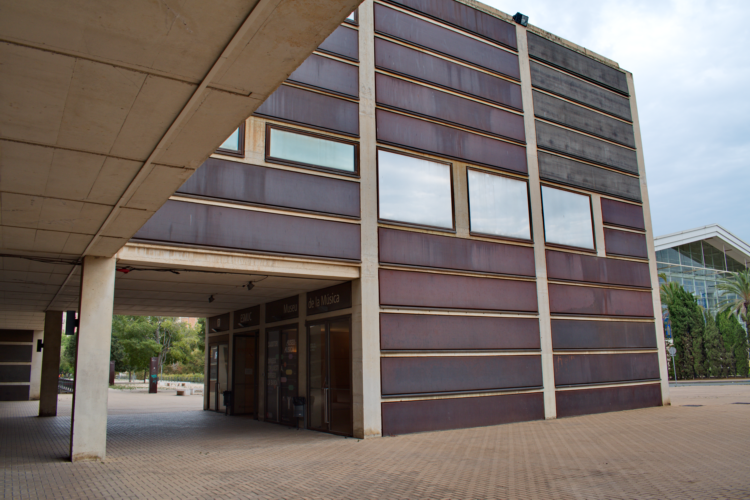
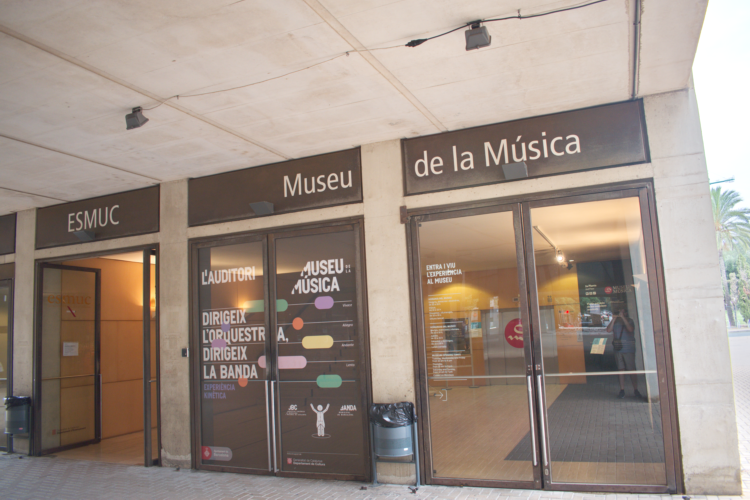
Barcelona Music Museum

The Barcelona Music Museum invites you to explore the worlds of music, and its history and culture, through observing instruments and listening to and interacting with music. Every instrument in this exceptional collection -500 of the more than 2,200 are on display- still bears the indelible mark made by humans

After an initial introduction on the diversity of musical instruments and types of music, the exhibition takes the visitor on a historical journey through different periods, from the Middle Ages up to the most popular music and modern-day technology, and finishes by taking a look at the cultures of other continents.

The Museum’s collection of classical guitars is considered to be one of the most important in the world. It includes fine examples like the guitars of Antonio de Torres, the greatest guitar maker in history.

At the end of the visit, in a special hall, visitors are given the chance to play various musical instruments; this is a particularly appealing activity for families with kids.

Opening hours

Tuesday, Wednesday and Friday from 10 am to 6 pm
Thursday from 10 a.m. to 9 pm
Saturdays and Sundays from 10 am to 7 pm

Guided tours of the Barcelona Music Museum

On weekends (as of September 16), dynamic visits are offered with musical interaction, included in the price of the entrance to the Museum. Thematic visits for families and general public that offer various readings of the collections, accompanied by musical illustrations or with musical practice proposed to the visitors.

For groups of more than 10 people, guided visits are offered in different languages ​​(Catalan, Spanish and English). The price is € 80 (price year 2021) and must be booked beforehand. Consult availability at reservesmuseu@auditori.cat or by calling at (+34) 932 563 650.

PRICE (2021)

6 € / Reduced 4,5 €

Where is the Museu de la Música

L’Auditori. Lepant 150, 2a pl.
08013 Barcelona
Phone (+34) 93 256 36 50
www.museumusica.bcn.cat
museumusica@bcn.cat

How to get to the Museum

Metro: Marina, Glòries (L1), Monumental (L2)
Bus: 6, 7, 54, 62, 92, V21 i H12
Train: Clot and Arc de Triomf
TRAM T4: Auditori-Teatre Nacional
Bicing: Av. Meridiana – Padilla
Parking: C/ Padilla, 159

Location

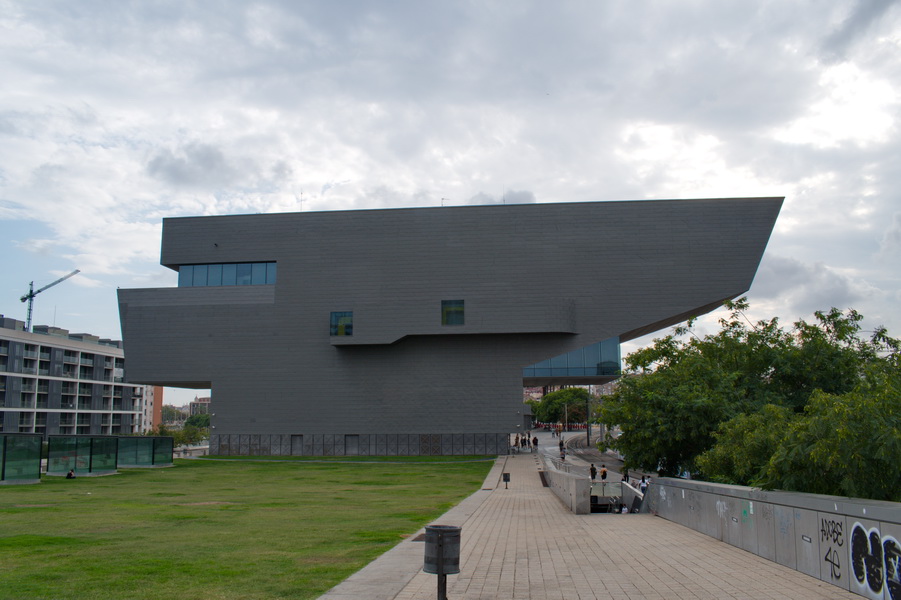
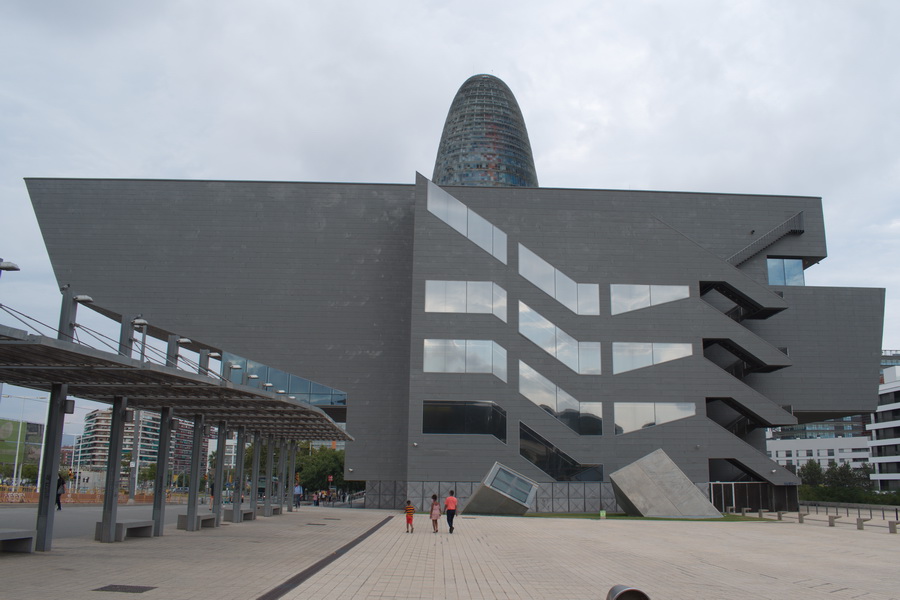
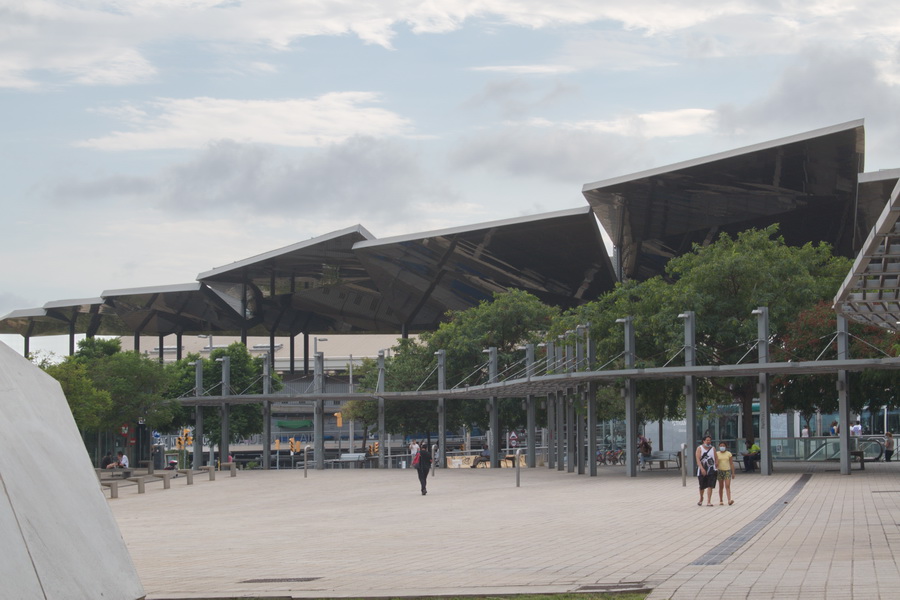
Design Museum of Barcelona (DHUB)

The Design Museum of Barcelona (Catalan: “Museu del Disseny de Barcelona”), is a new center of Barcelona’s Institute of Culture, which works to promote better understanding and good use of the design world, acting as a museum and laboratory. It focuses on 4 branches or design disciplines: space design, product design, information design and fashion.

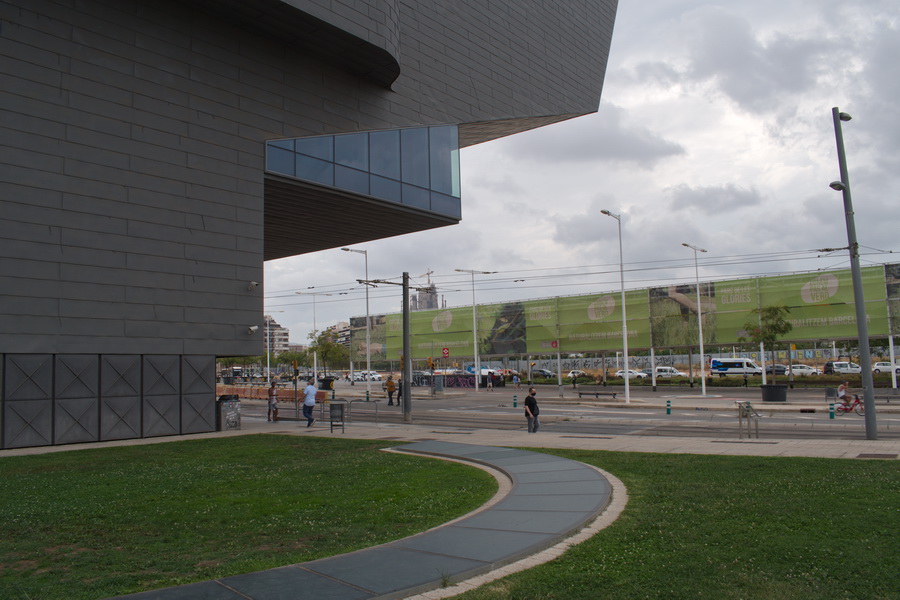
The Museum is the result of the merging of several previous existing museums, such as the Museu de les Arts Decoratives, the Museu Tèxtil i d’Indumentària and the Gabinet de les Arts Gràfiques collection. The opening of the new headquarters, located on Plaça de les Glòries, next to Torre Agbar, was set gradually during 2014.

Opening Times 

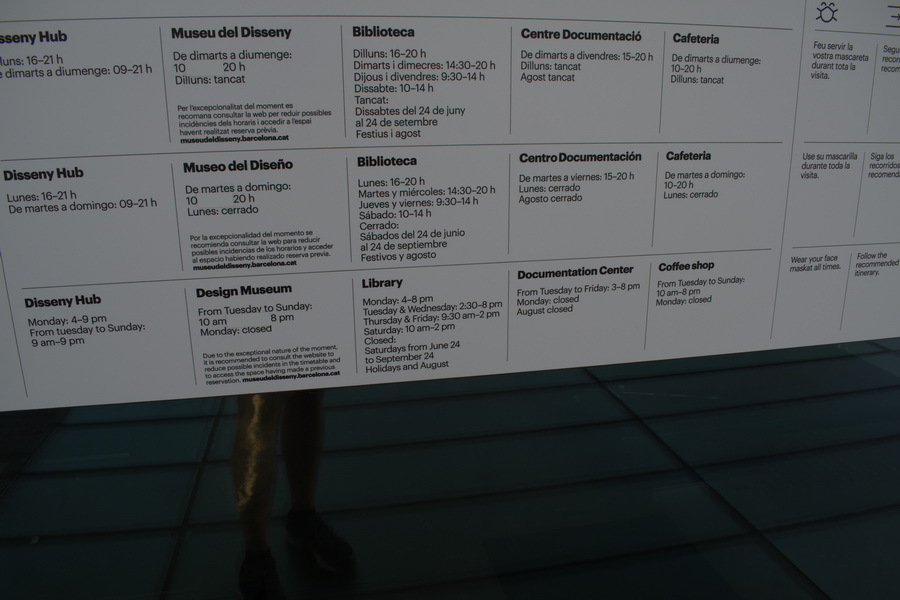
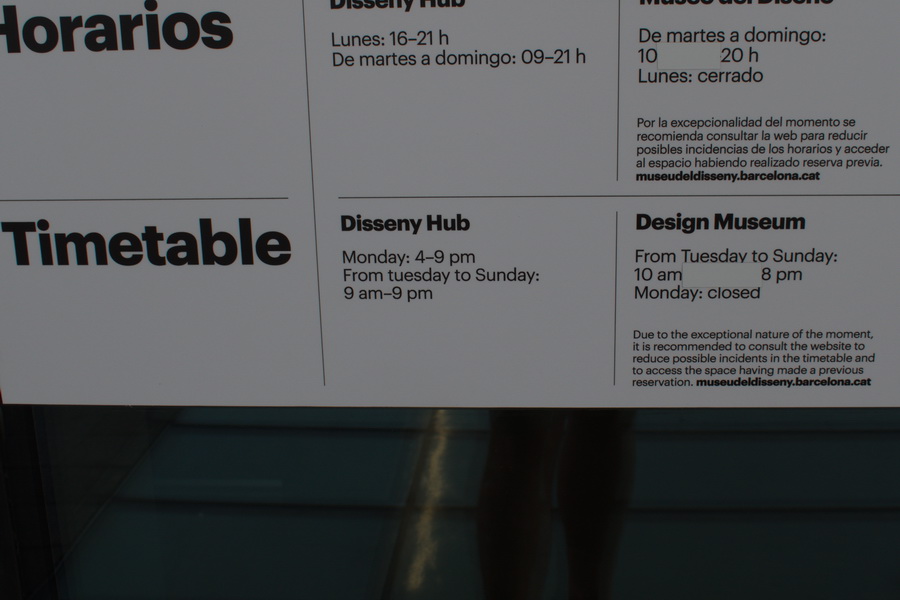
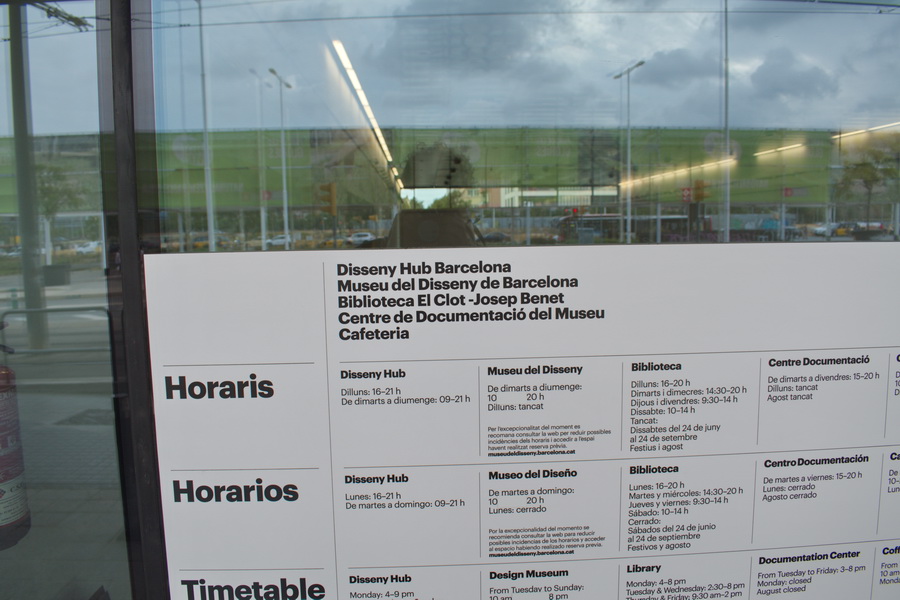
Tuesday to Sunday, from 10 am to 8 pm.

Closed: January 1, May 1, June 24 and December 25, and Mondays (except holidays)

Prices (2021):

General price: 6 €
Reduced price: 4 €

Temporary exhibitions
Check the prices of temporary exhibitions on the web
Ticket sales at the museum reception.

Free admission

Sunday afternoons, from 3 to 8 pm, and the first Sunday of each month.
Open days: February 12 (Saint Eulàlia’s Day) and September 24 (La Mercè).

Free with the pertinent accreditation:

  • Minors under 16 yearsHolders of the free Targeta Rosa “Pink Card” for senior citizens
  • Members of ICOM (International Council of Museums)
  • Members of the Association of Museologists of Catalonia
  • Professional tourist guides exercising their profession
  • Formal education teachers accredited by the management team at their centre of education
  • Formal education teachers accompanying groups of students
  • Holders of the metropolitan pass for carers of people with disabilities
  • Journalists, duly accredited
  • Holders of the Barcelona Card