Category Archives: parks and gardens of Barcelona

Zoo de Barcelona: A Historic Urban Zoo in the Heart of the Ciutadella Park

Occupying the southern half of the Parc de la Ciutadella, the Zoo de Barcelona has been part of the city’s landscape since 1892 — making it one of the oldest urban zoos in Europe. It combines a substantial collection of over 400 species with a location inside one of Barcelona’s most beautiful parks, creating an experience that works as much as a garden visit as a traditional zoo.

A Zoo with History

The zoo occupies land that was previously part of the Ciutadella fortress complex, built by Philip V after 1714 to control the city. The 19th-century conversion of the fortress grounds into a public park — and subsequently a zoo — was part of Barcelona’s civic transformation under the Restoration-era city government. Several of the original ornamental buildings from the 1888 International Exposition that took place in the park survive within the zoo grounds.

The zoo is perhaps best known internationally for once housing Floquet de Neu — Snowflake — the only albino gorilla in captivity, who lived at the Barcelona Zoo from 1966 until his death in 2003 and became one of the city’s most beloved figures. A memorial sculpture in his honour stands in the zoo.

The Collection Today

The zoo holds a wide range of mammals, birds, reptiles, and amphibians, with particular strength in its primate collection and its work with endangered Iberian species. The landscaped grounds, with mature trees and ornamental planting, make walking the zoo a pleasant experience in itself.

Getting There

The Zoo is at Parc de la Ciutadella. The nearest metro stations are Ciutadella-Vila Olímpica (L4) and Arc de Triomf (L1). Open daily from 10am; check the website for current hours and prices.

Pantà de Vallvidrera: A Hidden Reservoir Inside Barcelona City Limits

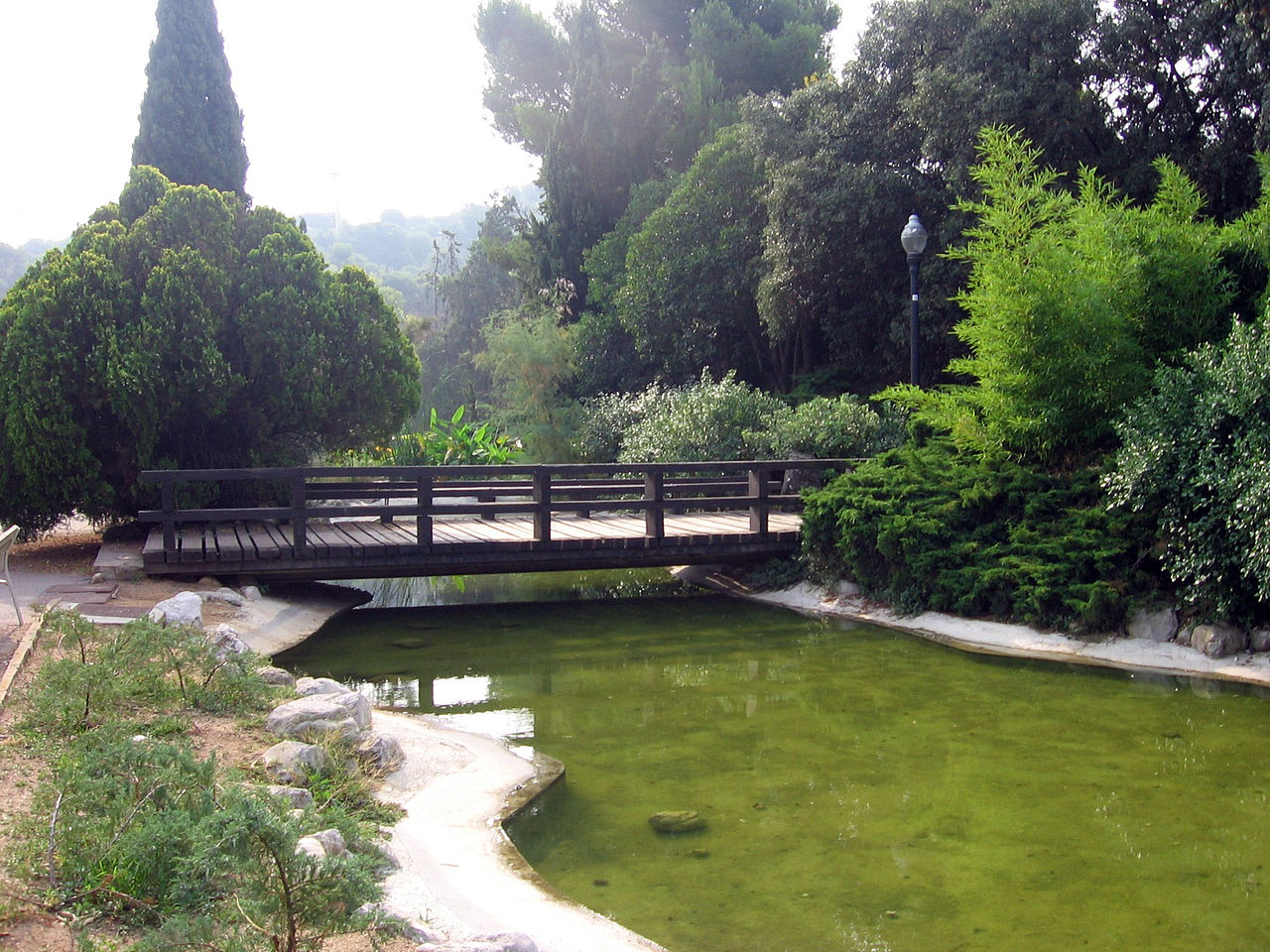
Most visitors to Barcelona never suspect that within the city’s official limits, tucked into the Collserola natural park, lies a peaceful Victorian reservoir surrounded by woodland walking trails. The Pantà de Vallvidrera (Vallvidrera Reservoir) is one of the city’s most complete escapes from urban life — and the contrast between its tranquillity and the density of the city visible just a few kilometres below is striking.

A 19th-Century Water Supply

The reservoir was built between 1856 and 1865 to supply water to the growing city of Barcelona below. The stone dam, spillway, and surrounding infrastructure are interesting examples of Victorian civil engineering, and the reservoir’s edge has been landscaped into a pleasant promenade. Ducks and herons inhabit the water; the surrounding Collserola woodland provides shade and birdsong.

Walking and Nature

The reservoir is the starting point for several walking trails through the Parc de Collserola, which extends across the hills above Barcelona. The trail network is extensive and well-marked, offering routes ranging from easy 30-minute strolls to half-day hikes with panoramic viewpoints. The air quality and sound environment here are completely different from the city below — it’s hard to believe you’re still within Barcelona’s municipal boundaries.

Getting There

Take the FGC train to Peu del Funicular and then the Vallvidrera funicular to the top. From the upper funicular station, it’s a 15-minute walk to the reservoir. Alternatively, take the FGC to Les Planes station and walk through the forest (around 20 minutes). Entry to the area is free.

Jardins de la Tamarita: Barcelona’s Elegant Private Garden Now Open to All

In the quiet residential streets of the Sant Gervasi district, the Jardins de la Tamarita preserve one of Barcelona’s finest examples of a late-19th-century private estate garden. Created by the wealthy Samaranch family in the 1880s and later owned by the Tamarit family (from whom the gardens take their name), the grounds were acquired by Barcelona City Council in 1975 and opened to the public.

A Victorian Garden in Perfect Condition

The garden occupies around three hectares and combines formal elements — a central fountain, geometric box hedges, a rose garden, a pergola of climbing roses — with more naturalistic areas of woodland and informal planting. The design reflects the eclectic taste of the Victorian wealthy: Mediterranean plants alongside exotic specimens brought from across the British Empire and the Americas.

A small lake with ducks, a collection of peacocks that roam freely through the grounds, ancient magnolia trees, and a charming pavilion add to the atmosphere of an aristocratic country estate that somehow survived intact into the 21st century. The contrast with the dense urban fabric surrounding it makes the experience all the more surprising.

An Uncrowded Retreat

The Jardins de la Tamarita remain largely unknown to international tourists, making them a genuine discovery — a peaceful retreat from the city that feels entirely different from the more famous parks. They are particularly beautiful in spring when the roses and magnolias are in bloom.

Getting There

The gardens are at Passeig de Sant Gervasi in the Sant Gervasi district. The nearest metro is Gràcia (L3) or the FGC Gràcia station. Entry is free; open daily from early morning to dusk.

Parc de Joan Miró: Sculptures, Palms, and the Iconic Woman and Bird

In the heart of the Eixample, where the old slaughterhouse once stood, Parc de Joan Miró offers one of the district’s few large green spaces — and a monumental surprise at its centre. The park is anchored by one of the most striking pieces of public sculpture in Barcelona: Dona i Ocell (Woman and Bird), a 22-metre ceramic tower created by Joan Miró in 1983, just months before his death at the age of 90.

Dona i Ocell: Miró’s Final Public Statement

The sculpture stands in a shallow reflecting pool, its surface covered in fragments of mirror and coloured ceramic tile — a technique Miró used throughout his career and that connects the work visually to Gaudí’s mosaic tradition. The form is deliberately ambiguous: part totemic figure, part bird, part pure abstraction. It rewards careful looking from multiple angles, each position revealing different readings of the form.

Miró worked with his long-time collaborator Joan Gardy Artigas on the ceramics. The sculpture is both a summation of Miró’s lifelong vocabulary and a gift to the city of his birth — a final, generous public gesture from one of Catalonia’s greatest artists.

The Park

Beyond the sculpture, the park is a well-used neighbourhood green space with palm trees, pergolas, a large pine grove, children’s playgrounds, and table tennis facilities. The upper level features a long pergola covered with climbing plants that provides welcome shade in summer. It’s a good place to rest between Eixample sightseeing, and the contrast between the surrounding dense urban grid and the open park space is striking.

Getting There

Parc de Joan Miró is between Carrer d’Aragó and Carrer de Tarragona, in the Esquerra de l’Eixample district. The nearest metro stations are Tarragona (L3) and Espanya (L1/L3). Entry is free and the park is open all day.

Jardins de Joan Brossa: Art, Nature, and Play on Montjuïc

On the north face of Montjuïc, where the hillside drops away toward the city below, the Jardins de Joan Brossa offer a relaxed and playful escape from Barcelona’s busy centre. Named after the great Catalan poet, visual artist, and language experimenter Joan Brossa, the gardens combine outdoor sculpture, children’s play facilities, and natural woodland in a way that makes them equally appealing to families, art lovers, and anyone wanting a quiet afternoon in the open air.

Joan Brossa: The Poet of Letters

Joan Brossa (1919–1998) was one of the most original figures in 20th-century Catalan culture — a poet who treated letters, typography, and objects as visual elements, creating works that blur the boundary between poetry, visual art, and theatre. The garden’s playful spirit reflects his aesthetic: things are not always what they seem, and the everyday world is full of hidden possibilities.

Scattered throughout the garden, Brossa’s own works and works by artists inspired by him appear among the trees and paths — typographic sculptures, visual poems, and conceptual installations that reward attentive exploration.

What to Do Here

Beyond the art, the garden has well-maintained children’s play areas, picnic spaces, and viewpoints over the city. The surrounding woodland provides shade in summer. It’s an excellent spot for a family afternoon that combines art, nature, and fresh air without spending anything — entry is free.

Getting There

The Jardins de Joan Brossa are on Avinguda de Miramar on Montjuïc, accessible from the Paral·lel metro (L2/L3) via the funicular, or from the Montjuïc cable car station. Open daily; free entry.

Jardins de Mossèn Costa i Llobera: Barcelona’s Cactus Garden Above the Sea

On the sea-facing slopes of Montjuïc, clinging to the terraced hillside above the port, the Jardins de Mossèn Costa i Llobera contain one of the finest collections of cacti and succulent plants in Europe. Over 800 species are represented in a garden of surreal, alien beauty — with the added bonus of spectacular views over Barcelona’s harbour and the sea beyond.

A Garden of Unlikely Grandeur

The garden was established in 1970 and named after the Mallorcan poet Miquel Costa i Llobera. The collection includes enormous specimens of Saguaro and Carnegiea cacti reaching 10 metres in height, sprawling agaves, dramatic Euphorbia trees, and rare succulents from across the Americas, Africa, and Madagascar. The terraced layout and the warm south-facing microclimate of the Montjuïc slopes create ideal growing conditions for plants from arid environments worldwide.

A Peaceful and Uncrowded Space

Unlike many Barcelona attractions, the Jardins de Mossèn Costa i Llobera remains genuinely uncrowded. The combination of unusual plants, terraced paths, sea views, and Barcelona’s warm climate makes it a memorable and restful experience. The garden is particularly atmospheric in the late afternoon light, when the shadows of the cactus columns stretch long across the hillside.

Getting There

The gardens are on the Montjuïc hillside above Carrer de Miramar. The most pleasant approach is on foot from the Miramar viewpoint, accessible via the Montjuïc cable car or the funicular. Entry is free. Open daily from early morning until dusk.

Carretera de les Aigües: Barcelona’s Panoramic Walking and Cycling Trail

Ask Barcelona residents where they go for their Sunday morning run or family walk with a view, and many will say the same place: the Carretera de les Aigües. This unpaved road runs along the Collserola ridge above the city, offering continuous panoramic views over Barcelona, the sea, and the delta — a 5-kilometre trail that feels a world away from the urban density below.

A Victorian Water Supply Route

The road was originally constructed in the 19th century to carry water from the Collserola springs down to the growing city below. The infrastructure is long gone, but the levelled trail it left behind has become one of the most popular outdoor spaces in Barcelona for running, cycling, and walking. The surface is packed earth and gravel — comfortable for trainers, mountain bikes, and most prams.

The Experience

The trail runs along the eastern face of the Collserola ridge at roughly 400 metres elevation, with the city spread out below. In clear weather, the views take in the Eixample grid, the Sagrada Família, Montjuïc, the port, and the sea. In spring, the surrounding scrubland is fragrant with rosemary and wild herbs. Benches at intervals make it easy to stop and take in the panorama.

Getting There

The most convenient access is via the FGC train to Peu del Funicular, then the Vallvidrera funicular to the top. You can also walk up from various points in the Sarrià-Sant Gervasi district. The route is free and open year-round; mornings and weekday afternoons are quieter than weekend mornings when locals exercise.

Font Màgica de Montjuïc: Barcelona’s Spectacular Light and Water Show

At the foot of Montjuïc, at the top of the grand avenue leading up from Plaça Espanya, the Font Màgica (Magic Fountain) is one of Barcelona’s most popular free attractions. On performance evenings, thousands of people gather to watch the synchronised water, light, and music shows that have been a city institution since the fountain was built for the 1929 International Exposition.

History of the Font Màgica

The fountain was designed by engineer Carles Buïgas and constructed in an astonishing nine months for the 1929 Exposition. Its centrepiece is a complex system of pumps, pipes, and coloured lights that can produce thousands of different water effects — jets, cascades, spirals, and fans — all choreographed to music. Buïgas’s creation was an immediate sensation and has been a landmark of Barcelona’s public life ever since.

The Shows

The evening performances synchronise the water movements with music ranging from classical pieces to contemporary pop — sometimes including Barcelona’s own cultural touchstones. The shows last around 20 minutes and run on repeat through the evening. The best viewing position is from the wide esplanade directly in front of the fountain, though the terraces of the Museu Nacional and CaixaForum offer elevated perspectives.

Practical Information

The Font Màgica is at Plaça de Carles Buïgas in Montjuïc, a short walk from Plaça Espanya (metro L1/L3). Performances typically run Thursday through Sunday evenings in spring and summer, and Friday and Saturday in autumn and winter — check the Barcelona tourism website for the current schedule as it changes seasonally. Entry is always free.

Mossèn Cinto Verdaguer Gardens

The Mossèn Cinto Verdaguer Gardens are public gardens located in the Gràcia neighborhood of Barcelona, Spain. They are named after Mossèn Cinto Verdaguer, a famous Catalan priest and writer. The gardens cover a large area and offer a variety of recreational activities and amenities, including walking paths, picnic areas, children’s play areas, and sports facilities. The gardens are also home to several species of plants and trees, and are considered an important green space in the city. They are a popular destination for local residents and visitors, and provide a peaceful escape from the city. The Mossèn Cinto Verdaguer Gardens are easily accessible by public transportation and are open to the public year-round.

La noia dels lliris (The Girl of the Lilies – 1970), which is near the lake, pays homage to Mossèn Cinto Verdaguer and bears an inscription with the following verses by the great poet: “Bonica és la rosa / més ho és el ram / més ho és el lliri / que floreix tot l’any” (Pretty is the rose / more so the bouquet / more so the lilly / which blossoms all year round). Sebastià Badia’s Maternitat (Maternity – 1970), is next to the gardeners’ shed, under a large maritime pine. It is a serene, sweet and very tender image of a woman looking at her son as she holds him in her lap.

The Mossèn Cinto Verdaguer Gardens are a place for spending time and taking a stroll. They are so peaceful that turtle doves are frequently seen walking on the grass.
Around the gardens there are paths and short sections of stone stairs covered in ivy, which has established itself between the steps. Visitors can use these for walking between the large expanses of grass that fill the gardens, discovering the collection of plants they contain as they go. The bright green grass contrasts with the colours of the flowers during spring and summer and with the ochre hues of the deciduous plants in autumn.
The main entrance on Av Miramar is monumental. Visitors there are greeted by a large Barcelona coat of arms made with bulbous plants and framed by large magnolias which, when they bloom at the end of spring, give the whole area a truly spectacular appearance.
Here you can view the large, gently rising green carpet formed by the garden meadows.

As with so many other green spaces in Barcelona, especially in the Montjuïc area, these gardens are located in an old quarry. They were officially opened on the same day as the Mossèn Costa i Llobera and Joan Maragall gardens: 22 June 1970, and are one of the three parks dedicated to Catalan poets.

Collserola Park

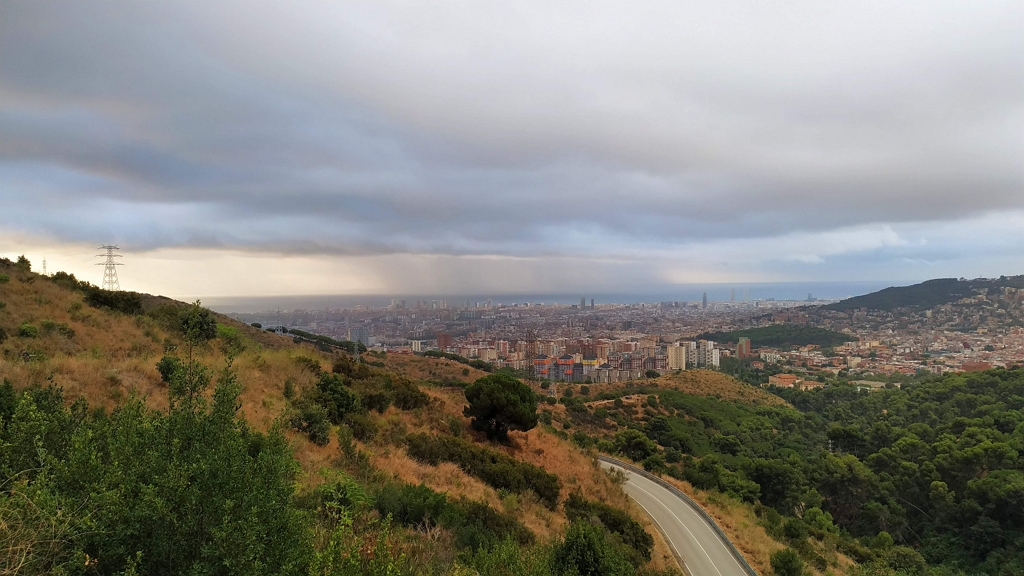
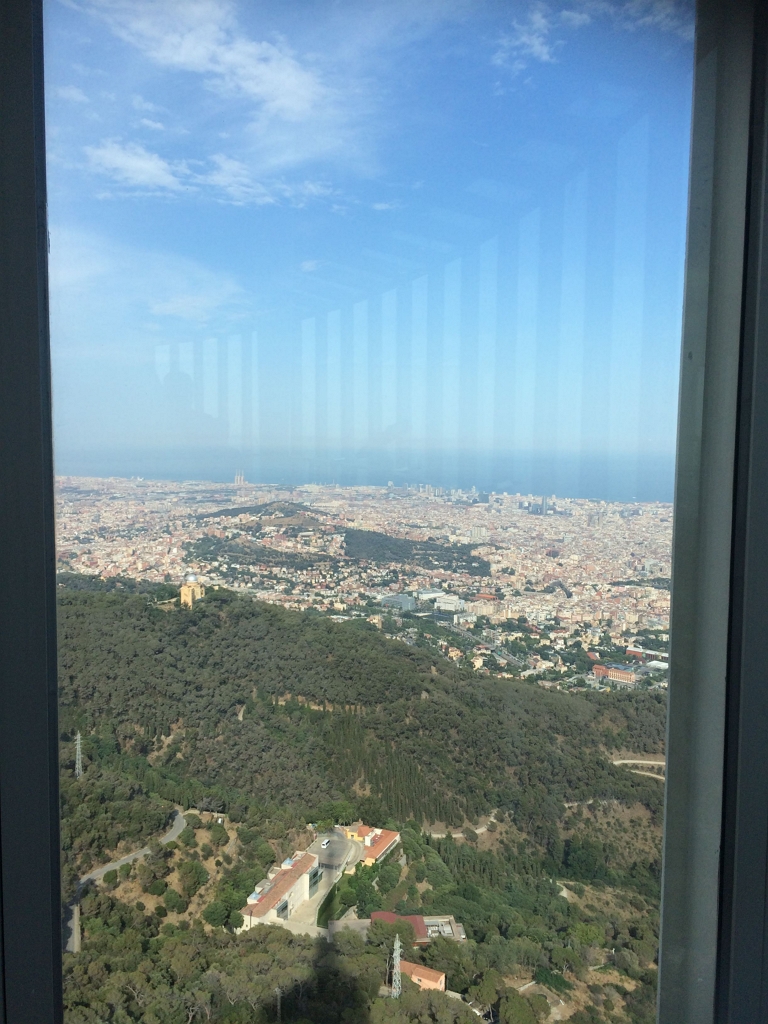
Collserola Park is a large urban park located in the Collserola mountain range near Barcelona, Spain. It covers over 8,000 hectares and is the largest green area in the Barcelona metropolitan region. The park offers a variety of recreational activities and amenities, including hiking trails, picnic areas, and sports facilities. It is also home to a rich variety of flora and fauna, and is considered an important ecological reserve. The park provides a peaceful escape from the city and offers stunning views of Barcelona and the surrounding area. Collserola Park is a popular destination for outdoor enthusiasts and is considered an important part of the city’s park system. It is easily accessible by public transportation and is a popular destination for day trips from Barcelona.